
5 Reasons Couples Sleep Better With a Split King
A split king mattress has become one of the most popular choices for couples who want better sleep without compromising comfort.
Read article
Preparing your best sleep…
Snooze Sleep Blog

For generations, the standard bed setup consisted of a flat mattress resting on a static foundation. While a flat bed provides a continuous surface for resting, human anatomy is not naturally flat. Sleeping horizontally for seven to eight hours a night places excess pressure on cardiovascular pathways and allows gravity to work against digestive and respiratory processes.
Originally designed for medical environments to facilitate patient recovery, adjustable bed bases have transitioned into modern residential bedrooms as an essential ergonomic health investment. By allowing users to precisely articulate the head and foot of the bed, adjustable foundations align the mattress with the body's natural contours. Elevating specific body zones leverages gravity to relieve pressure on joints, improve systemic blood flow, reduce airway blockages, and prevent digestive backflow.
Sitting or standing throughout the day causes fluid to pool in the lower extremities due to gravity. When you lie completely flat at night, your cardiovascular system must work harder to pump blood horizontally across your entire body. For individuals suffering from poor circulation, varicose veins, swollen ankles, or deep leg fatigue, a flat mattress offers little therapeutic relief.
Adjustable bed bases feature independent leg articulation that elevates the knees and lower legs above the level of the heart. Positioned in this elevated state, gravity naturally assists venous return, helping blood and lymphatic fluid flow smoothly back toward the heart. This reduction in peripheral pressure decreases fluid retention and swelling in the lower limbs.
Furthermore, combining moderate leg elevation with a slightly raised head position creates the ergonomic "Zero-Gravity" posture, originally pioneered by NASA. In the Zero-Gravity position, the body's weight is distributed evenly across the mattress, relieving pressure points on the lower back and hips. By neutralizing spinal gravity pressure, the surrounding muscles can fully relax, encouraging deeper, uninterrupted sleep and reducing morning joint stiffness.
Snoring and obstructive sleep apnea (OSA) are among the most prevalent sleep-disrupting conditions worldwide. When sleeping flat on your back, gravity pulls the soft tissues at the back of the throat, including the tongue and soft palate, downward toward the airway. As these tissues relax during deep sleep, they partially or completely block the trachea. The resulting air turbulence causes the vibrations known as snoring, while complete blockages cause sleep apnea episodes, forcing the brain to repeatedly wake the body to resume breathing.
Elevating the head of an adjustable bed base by just 10 to 30 degrees fundamentally changes how gravity acts on upper respiratory anatomy. In an inclined position, gravity holds the tongue and throat tissues forward, keeping the upper airway open and unobstructed.
This gentle elevation significantly reduces the frequency and intensity of snoring. For light to moderate sleep apnea sufferers, sleeping at an incline decreases airway resistance, allowing oxygen to flow continuously without requiring high-pressure medical interventions. Better oxygen intake leads to more stable heart rates throughout the night and prevents the jarring, micro-awakenings that cause daytime fatigue.
Gastroesophageal Reflux Disease (GERD) and nighttime heartburn occur when stomach acid flows upward past the lower esophageal sphincter (LES) into the esophagus. When you lie horizontally on a flat mattress, stomach acid can easily pool near the esophagus junction and leak upward. Because the lining of the esophagus lacks the protective mucus coating found in the stomach, acid contact causes severe burning sensations and long-term tissue irritation that routinely disrupts sleep.
Adjustable bases provide a natural, mechanical solution to acid reflux through head elevation. Raising the upper body by 6 to 8 inches utilizes gravity to keep stomach contents resting safely at the bottom of the digestive tract.
Unlike stacking extra pillows, which bends the neck awkwardly and actually increases stomach pressure, an adjustable bed elevates the entire torso in a straight, supported line. This ergonomic incline prevents abdominal compression while ensuring that any stray stomach acid is quickly drawn back downward by gravity. As a result, chronic reflux sufferers experience immediate relief from painful nighttime symptoms without relying heavily on antacid medications before bed.
Beyond treating specific medical conditions, adjustable bed bases enhance overall quality of life. Modern adjustable foundations frequently include programmable preset positions, under-bed LED lighting, integrated USB charging ports, and dual-zone massage features that soothe sore muscles before sleep.
Whether you are reading, working on a laptop, watching television, or recovering from an intense workout, articulating the bed into a custom lounge position eliminates the awkward back-straining posture caused by propping up regular pillows against a headboard.
Visiting a mattress store and investing in an adjustable bed base transforms the bed from a passive piece of furniture into an active, health-promoting wellness tool. By addressing circulation issues, clearing airways, and harnessing gravity to prevent acid reflux, adjustable bases deliver the targeted ergonomic support needed to wake up refreshed and fully restored.
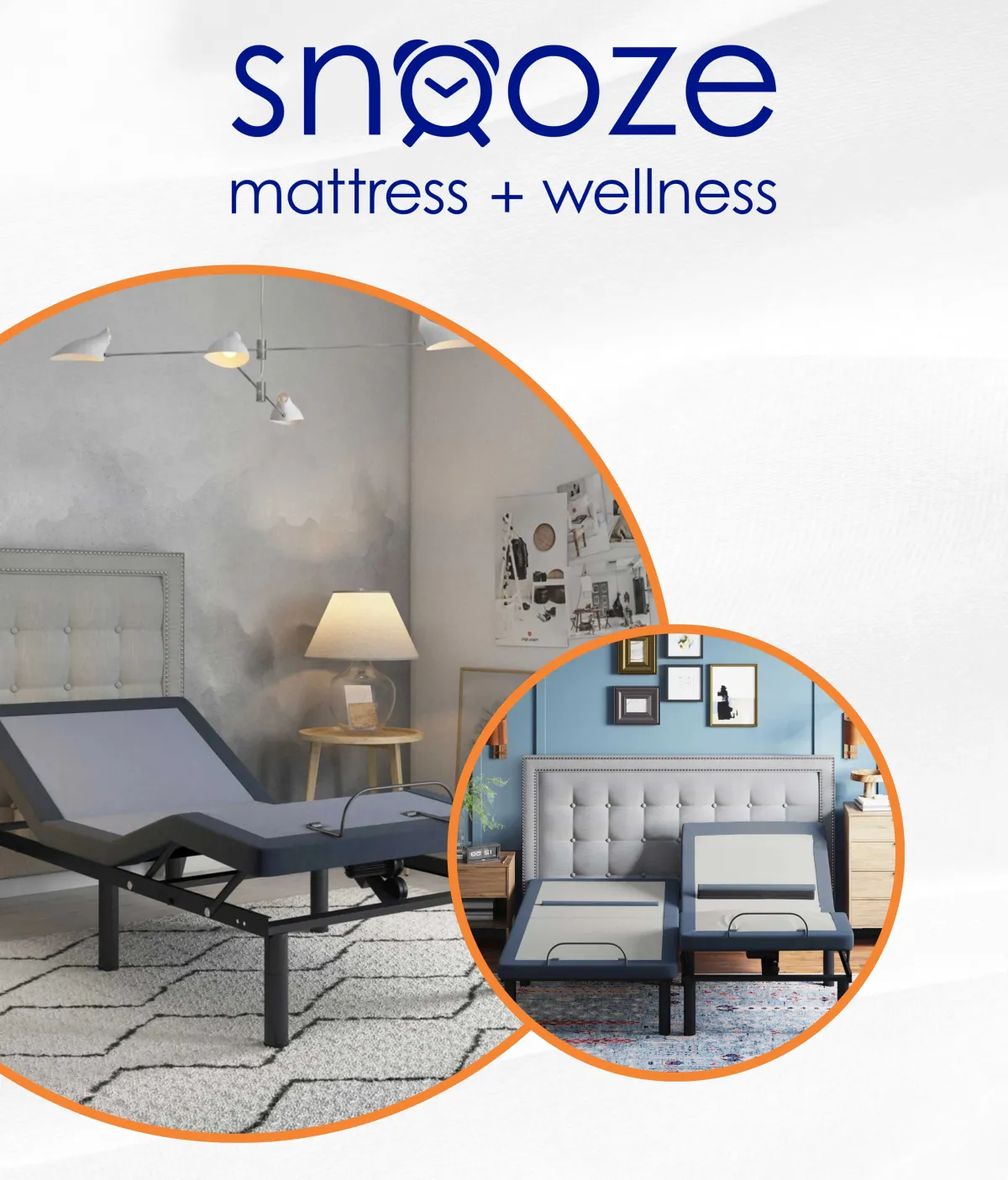
Most modern foam, hybrid, latex, and pocketed-coil mattresses are naturally flexible and fully compatible with adjustable bases. Innerspring mattresses with rigid, interconnected border wires (traditional Bonnell or continuous coils) are the main exception, as bending them can permanently warp the internal springs. As a general rule, if your mattress is memory foam, latex, or utilizes individually wrapped coils, it will bend smoothly with an adjustable foundation without damaging the mattress structure.
Most modern adjustable bases arrive with minimal assembly designs. The main frame usually unfolds, requiring you to simply plug in the power cables and insert the mattress retainer bar at the foot of the bed. Because adjustable bases house heavy-duty steel frames and motors, the units themselves are heavy (often ranging from 100 to 200+ pounds). It is strongly recommended to have two people present during setup.
Weight capacities vary by model and manufacturer, but standard modern adjustable bases typically support between 650 and 850 pounds, with heavy-duty models supporting up to 1,000 pounds. Yes, this total weight limit includes both the weight of the mattress and the sleepers. To ensure smooth motor performance and long-term durability, subtract the weight of your mattress (usually 70 to 150 pounds) from the manufacturer's total weight rating to determine the maximum combined weight capacity for the sleepers.
Not sure which mattress is right for you?
Take the 60-Second Sleep Quiz →Real People. Real Results. Real Sleep.
Talk to our Sleep Specialists in El Paso. Get pressure-mapped, try the mattresses that fit your body, and ask about 0% financing — we treat every person who walks through our door like family.
10501 Gateway Blvd W Ste 16, El Paso, TX 79925 · Mon–Sat 10 AM–7 PM · Sun 11 AM–6 PM
A split king mattress has become one of the most popular choices for couples who want better sleep without compromising comfort.
Read articleSleep is one of the most powerful tools your body has for healing, restoring energy, processing information, and keeping your mind sharp.
Read article