
How to Optimize Your Bedroom for Deep Sleep
Sleep is one of the most powerful tools your body has for healing, restoring energy, processing information, and keeping your mind sharp.
Read article
Preparing your best sleep…
Snooze Sleep Blog

We spend roughly one-third of our lives resting our faces directly against a pillow. We wash our bedsheets regularly and carefully select our mattress, yet the pillow is often forgotten until it becomes flat or lumpy.
Beyond losing its ability to support your cervical spine, an aging pillow can accumulate allergens and moisture over months of daily use. Knowing when your pillow has reached the end of its functional life and recognizing the hygiene concerns associated with continued use can help you maintain a cleaner, more comfortable sleep environment.
When you notice signs of structural breakdown or morning allergy symptoms, visiting a local mattress store to replace your worn pillow can make an immediate difference in how deeply you sleep.
Not all pillows age at the same rate. The inner fill material affects how well a pillow resists flattening and wear over time.
Down-alternative (polyester microfibers) and natural down pillows are known for their soft feel. However, synthetic microfibers can gradually lose their shape under daily compression and heat. Over 12 to 24 months, the fibers may clump together, reducing the pillow's loft and affecting how well it supports your head.
Solid or shredded memory foam and natural latex pillows are generally more resistant to flattening than traditional fiberfill pillows. Their dense cell structures resist flattening far longer than fiberfill. Even so, after two to three years of absorbing facial oils and ambient humidity, the foam begins to lose its responsive contouring properties and slow-recovery support.
While loss of neck support is easy to notice, allergens and moisture can also accumulate inside an aging pillow without obvious signs.
Microscopic dust mites do not bite or spread disease, but their droppings and shed skins are among the most common triggers for indoor allergies and nighttime asthma flare-ups. Dust mites thrive in warm, humid environments and feed primarily on shed human skin cells.
Over a single year of sleep, a pillow absorbs hundreds of grams of dead skin flakes and facial oils. This creates a dense feeding ground for dust mite populations, which can lead to persistent morning symptoms such as:
Your pillowcase acts as a barrier, but skin sebum, sweat, hair products, and drool seep through the fabric into the pillow core every single night. Moisture trapped within fiberfill or foam can contribute to microbial growth, particularly when the pillow remains damp. If you suffer from unexplained facial breakouts or acne, an unwashed or outdated pillow core may be continually transferring bacteria back to your pores while you rest.
Over time, pillows can collect skin oils and moisture that contribute to staining and unpleasant odors. If your pillow is discolored compared to when you first unboxed it, check its condition and cleaning instructions to determine whether it needs replacing.
If you aren't sure how long you've owned your pillow, use these simple physical tests to evaluate whether it still provides adequate hygiene and support:
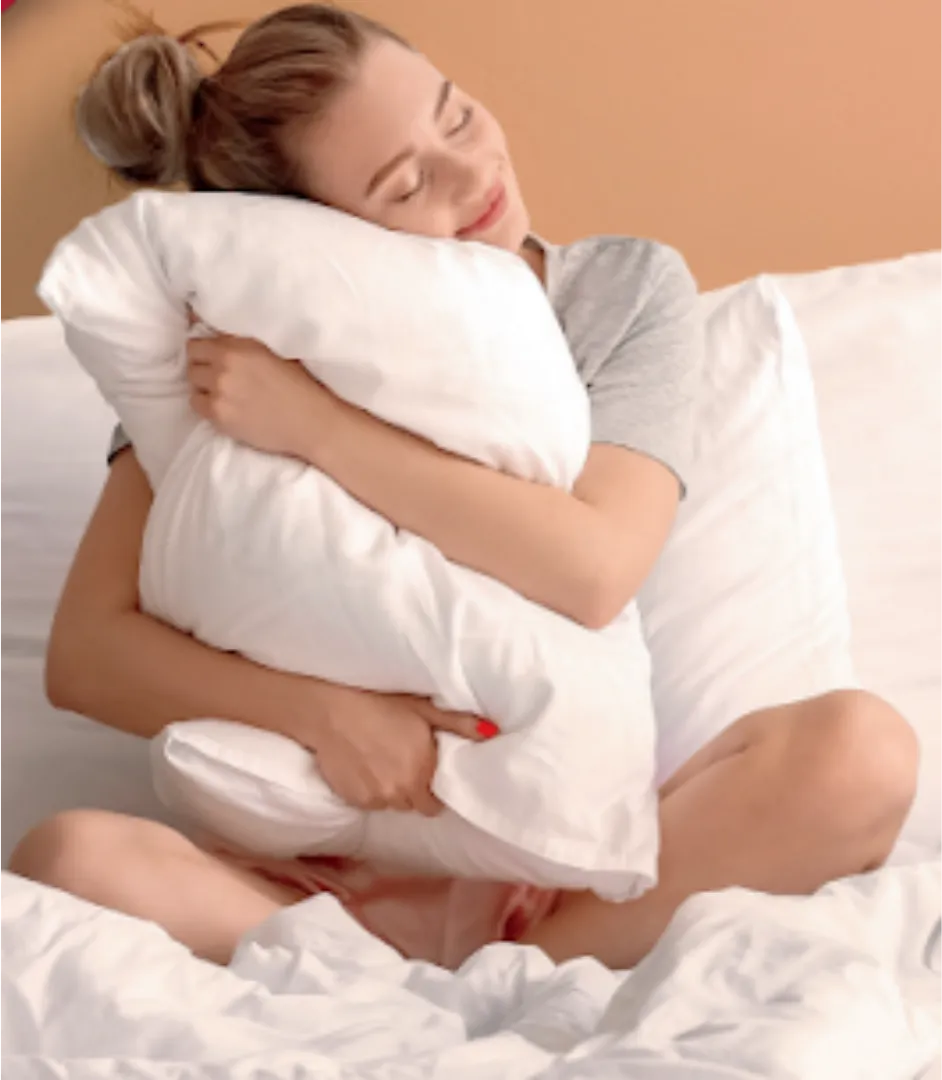
Replacing your pillow every 18 to 24 months is a small investment that pays massive dividends for your neck health and skin clarity.
To ensure your new pillow matches both your personal sleep hygiene standards and your body's structural needs, explore our mattress deals and visit our store to find a suitable pillow. Testing fresh, hypoallergenic materials alongside a specialist helps you select the perfect fill type and loft to keep your spine aligned and your sleep environment fresh for years to come.
While washing your pillow cover weekly and cleaning machine-washable pillow inserts every 3 to 6 months helps manage surface hygiene, it does not stop the structural degradation of the fill material. Over time, exposure to water, heat, and agitation accelerates the breakdown of synthetic fibers, causes down clusters to clump, and creates internal tearing in memory foam cores. While routine laundering effectively reduces dust mites and skin oil accumulation in the short term, it cannot restore lost structural resilience, meaning you will still need to replace your pillow every 18 to 36 months to protect your neck alignment.
Natural latex and solid gel-infused memory foam are exceptionally resistant to dust mites and allergens due to their dense, non-porous physical structure. Combining a hypoallergenic solid latex or memory foam pillow with a removable, zippered pillow protector made from tightly woven antimicrobial or phase-change fabric creates an impenetrable barrier against environmental allergens.
A standard decorative pillowcase is primarily designed for soft surface comfort and aesthetic appeal, featuring an open-ended design that allows sweat, skin flakes, and microscopic dander to migrate directly onto the pillow core. A zippered pillow protector is a specialized, fully enclosing secondary cover made from tightly woven or micro-porous membrane fabrics that block liquid, oils, and particles as small as 5 to 10 microns. Using a high-quality protector beneath your standard pillowcase adds an essential layer of defense that keeps the inner pillow core significantly cleaner and fresher over its functional lifecycle.
No, solid memory foam and natural latex pillows should never be submerged in a washing machine or placed in a household tumble dryer. The heavy agitation and spinning action of a washing machine tear the delicate internal cell structure of the foam, while heat from a dryer melts, warps, or permanently hardens the material. To clean a memory foam or latex pillow, remove and wash the outer protective cover separately according to its care label, then spot-clean the foam core.
When visiting a mattress store to evaluate fresh pillows, first check that the store provides clean, single-use sanitary protective covers or paper barriers for testing. Focus on how the pillow supports your head while lying in your natural sleep position on a bed with a similar firmness level to your own mattress. Observe whether your neck stays straight without dipping or tilting, and ask a sleep specialist to verify that your ears, shoulders, and hips are properly aligned. Testing in person also lets you physically assess whether breathable, cool-to-the-touch fabrics or solid hypoallergenic cores feel comfortable against your skin.
Not sure which mattress is right for you?
Take the 60-Second Sleep Quiz →Real People. Real Results. Real Sleep.
Talk to our Sleep Specialists in El Paso. Get pressure-mapped, try the mattresses that fit your body, and ask about 0% financing — we treat every person who walks through our door like family.
10501 Gateway Blvd W Ste 16, El Paso, TX 79925 · Mon–Sat 10 AM–7 PM · Sun 11 AM–6 PM
Sleep is one of the most powerful tools your body has for healing, restoring energy, processing information, and keeping your mind sharp.
Read articleChoosing a mattress isn't always simple, as the right level of firmness for comfort and support varies from person to person.
Read article